In Tucson, trees don’t grow under “normal” conditions. Extreme heat, rocky soil, drought cycles, and monsoon storms all influence how trees develop — and how they should be maintained. That’s why understanding the difference between tree pruning and tree trimming is so important for Arizona homeowners.
Although the terms are often used interchangeably, they serve very different purposes.
Tree Trimming: Managing Growth and Appearance
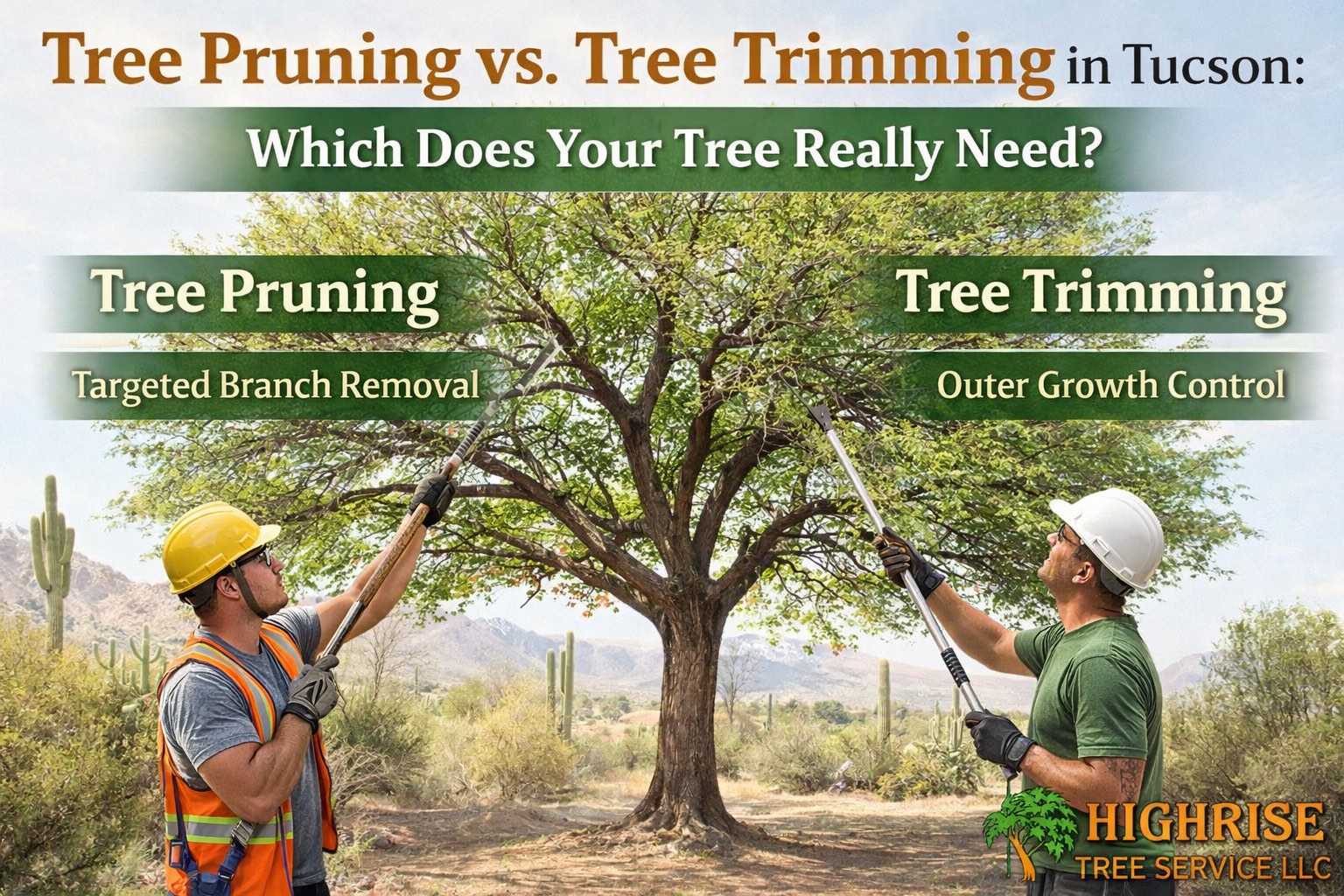
Tree trimming is primarily about control and maintenance. It focuses on shaping the outer canopy and keeping trees from becoming overgrown or unsafe.
Trimming is commonly used to:
- Keep trees from blocking walkways or driveways
- Prevent branches from contacting roofs or power lines
- Maintain a balanced, attractive shape
- Reduce excessive growth after rainy seasons
In Tucson, trees can experience rapid, uneven growth following monsoon moisture. Without trimming, branches may become long, heavy, and vulnerable to wind damage.
Ideal for: Healthy trees that need routine upkeep
Goal: Safety, clearance, and visual appeal
Tree Pruning: Protecting Tree Health and Structure
Tree pruning is more precise and health-driven. It involves selectively removing specific branches to improve how a tree grows and withstands stress.
Pruning is used to:
- Remove dead or diseased limbs
- Strengthen branch structure
- Reduce weight on weak joints
- Improve airflow and sunlight exposure
- Lower the risk of breakage during storms
Because Tucson trees already endure extreme environmental stress, improper growth patterns can quickly become dangerous. Strategic pruning helps trees survive high winds, heat stress, and seasonal storms.
Ideal for: Long-term tree health and storm resilience
Goal: Strength, stability, and longevity
Why Tucson Trees Require a Specialized Approach
Desert trees behave differently than trees in cooler or wetter climates. Factors unique to Tucson include:
- Shallow root systems due to hard desert soil
- Heat-related stress that weakens branches
- Sudden wind and rain during monsoon season
- Sun exposure that can damage over-pruned trees
Over-trimming can leave trees vulnerable to sunburn, while incorrect pruning cuts can attract pests or disease. That’s why professional evaluation is critical before any cutting is done.
Pruning vs. Trimming: At a Glance
- Trimming = routine maintenance and size control
- Pruning = corrective care and structural improvement
- Trimming keeps trees neat
- Pruning keeps trees strong
Both are important — but timing and technique matter.
Signs Your Tree Needs Attention
You should consider professional service if you notice:
- Dead or broken branches
- Excessive leaning or uneven growth
- Dense canopies blocking airflow
- Limbs cracking or splitting
- Storm damage or fallen branches
Ignoring these signs can lead to property damage or costly removals later.
Why Homeowners Trust Highrise Tree Service
At Highrise Tree Service, we understand how Tucson’s environment affects local tree species. Our team evaluates each tree individually and recommends the appropriate service — trimming, pruning, or a combination of both — based on safety, health, and long-term performance.
We don’t over-cut, and we don’t guess. We use proven methods designed for desert landscapes.
The Bottom Line
Tree trimming and tree pruning may sound similar, but choosing the right service at the right time can make all the difference. Proper care keeps Tucson trees safer, healthier, and better equipped to handle extreme weather.
If you’re unsure what your trees need, professional guidance can prevent problems before they start.
Reach out to Highrise Tree Service in Tucson to schedule an evaluation and protect your trees year-round.
For more information on Stump Grinding in Tucson, AZ , and Tree Removal in Tucson, check out Tree Service in Tucson, AZ. Follow us on Facebook and Instagram.
This information is for general reading purposes only and should not be considered as professional or legal advice.