Trees provide valuable shade, natural beauty, and character to residential and commercial properties throughout Tucson, Arizona. However, when a tree becomes severely damaged, diseased, or structurally unstable, it can pose a serious risk to your home, vehicles, and surrounding landscape. While many damaged trees can recover with professional care, others may need to be removed to prevent potential accidents and property damage.
Understanding the warning signs of a hazardous tree can help homeowners make informed decisions about their landscape. Major trunk damage, extensive decay, large dead limbs, severe leaning, compromised roots, and significant storm damage are all conditions that may indicate a tree needs professional attention. Knowing when to preserve a tree and when removal may be the safest option is an important part of maintaining a healthy and secure outdoor environment.
Major Trunk Damage and Structural Weakness
A tree’s trunk provides the structural support needed to hold its branches and canopy. When the trunk develops deep cracks, large cavities, or significant areas of deterioration, the tree may lose its ability to support its own weight. This becomes particularly concerning during Tucson’s summer monsoon season, when strong winds and heavy rainfall can place additional stress on weakened trees. Large vertical cracks, missing bark, hollow sections, and visible separation between major portions of the trunk are warning signs that should not be ignored.
Although some trees can survive considerable trunk damage, extensive structural weakness may make removal necessary. A professional tree evaluation can help determine whether corrective pruning or other tree care measures can preserve the tree or whether its condition presents an unacceptable safety risk.
Extensive Decay and Fungal Growth
Tree decay can develop gradually, sometimes weakening the interior of the trunk or root system before noticeable symptoms appear on the outside. Mushrooms growing around the base, large cavities, soft or crumbling wood, and extensive dead sections may indicate that decay has affected the tree’s structural integrity. While fungal growth does not automatically mean a tree must be removed, certain types of decay can significantly compromise its stability.
When decay affects the main trunk or major supporting roots, the tree may become increasingly vulnerable to failure. Homeowners who notice significant deterioration should arrange for a professional evaluation to determine whether the tree can be preserved or whether removal is the safer long-term solution.
Large Dead Limbs and Extensive Canopy Damage
Dead branches are a common concern for Tucson property owners, especially when they extend over homes, driveways, sidewalks, or outdoor living spaces. Large dead limbs can break unexpectedly, creating a potential hazard for people and property below. In many situations, professional tree trimming can eliminate these hazards while preserving the remaining healthy portions of the tree.
However, when a tree has extensive canopy dieback, multiple failing limbs, or widespread structural deterioration, removing individual branches may not adequately address the underlying problem. A professional assessment can help determine whether selective pruning will restore safety or whether complete tree removal is necessary.
Severe Leaning and Compromised Root Systems
Not every leaning tree is dangerous. Some trees naturally grow at an angle and remain structurally stable for decades. However, a tree that suddenly begins leaning or develops a noticeably greater lean may be experiencing root failure, soil movement, or structural instability. Newly exposed roots, raised soil around the trunk, and cracks in the surrounding ground can indicate that the tree’s anchoring system has been compromised.
Root damage can also occur during construction, excavation, underground utility repairs, or major landscaping projects. Because a tree’s roots provide both nourishment and structural support, significant damage can affect its health and stability. If a mature tree begins shifting position or develops a sudden lean, particularly near a home or other structure, it should be professionally evaluated as soon as possible.
Significant Monsoon Storm Damage
Tucson’s monsoon season brings powerful winds, intense rainfall, and sudden thunderstorms that can cause substantial damage to mature trees. Broken branches, split trunks, uprooted roots, and partially fallen trees are common concerns following severe weather. While some storm-damaged trees can recover with professional pruning and corrective care, others may be too severely compromised to remain safely in place.
After a major storm, homeowners should inspect their property from a safe distance and look for hanging branches, newly leaning trees, and visible structural damage. Trees with split trunks, extensive root failure, or major structural problems may require removal to prevent additional property damage. Avoid standing beneath damaged limbs or attempting to remove large, unstable branches without professional assistance.
When Can a Damaged Tree Be Saved?
Tree removal should not automatically be the first solution when a tree develops problems. Many trees can continue to thrive with appropriate care, including selective pruning, deadwood removal, and corrective trimming. The decision depends on the tree’s overall health, structural condition, location, and potential risk to surrounding property. When damage is limited to a few branches, professional trimming may be sufficient. However, if the main trunk, major roots, or overall structure has been severely compromised, removal may be the safest long-term option.
Professional Tree Removal in Tucson, AZ
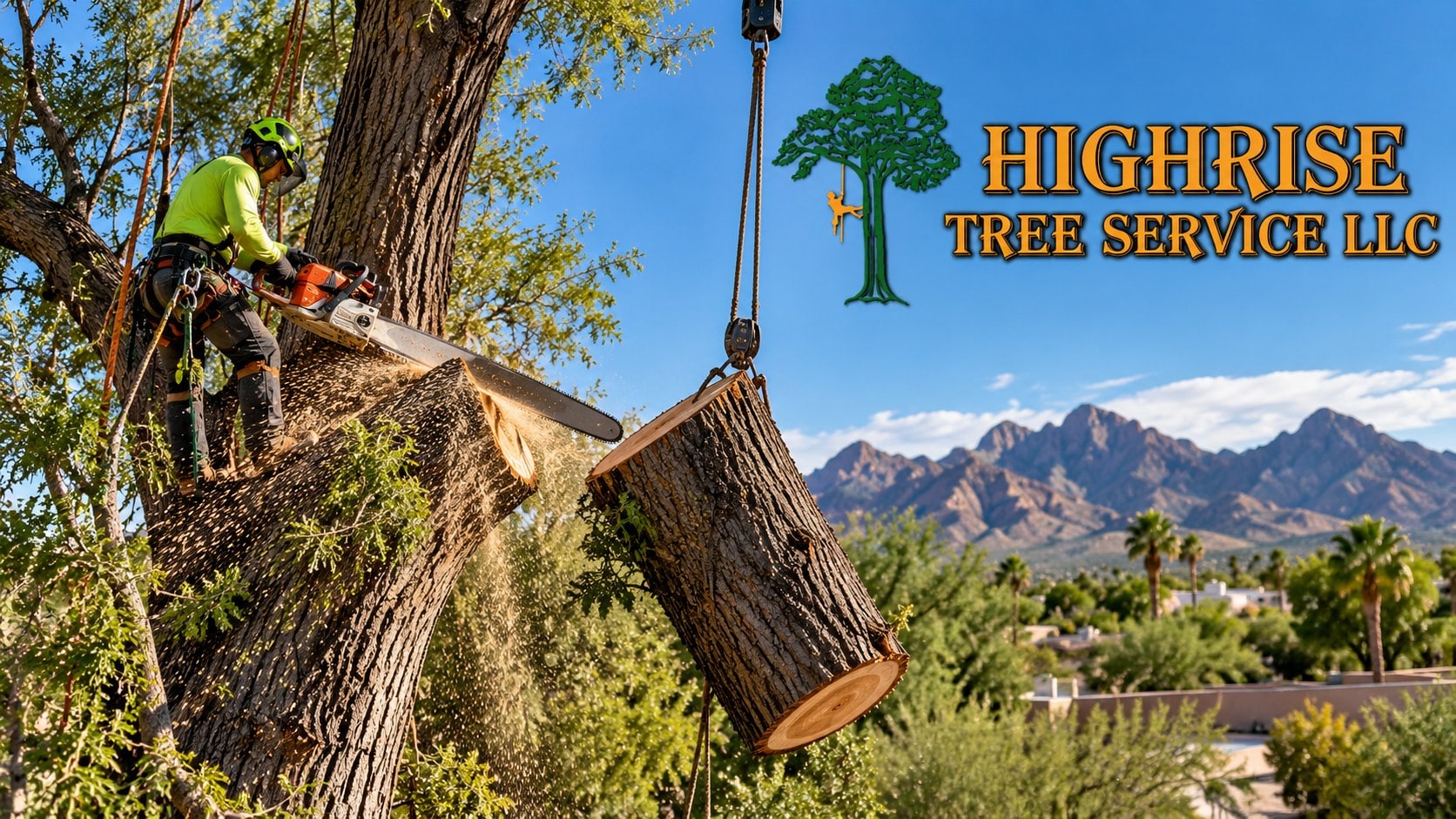
Highrise Tree Service provides professional tree removal for residential and commercial properties throughout Tucson, Oro Valley, Marana, Catalina Foothills, East Tucson, and surrounding Southern Arizona communities. Our experienced crew handles small and large tree removals using professional equipment and proven techniques, including challenging removals involving trees located near homes, walls, driveways, and other structures.
Whether your tree has suffered significant storm damage, developed structural problems, or become a potential safety hazard, Highrise Tree Service can help you determine the appropriate course of action. We also provide professional tree trimming, stump grinding, storm damage cleanup, and 24-hour emergency tree services to help maintain safe and attractive properties throughout the Tucson area.
Frequently Asked Questions About How to Remove a Tree
How do I know if my tree is dangerous?
Large cracks, extensive decay, major dead limbs, exposed roots, and sudden leaning may indicate structural problems. A professional evaluation can help determine whether the tree poses a safety risk and whether removal is necessary.
Can a leaning tree be saved?
Some leaning trees are structurally sound and do not require removal. However, a tree that has recently developed a severe lean, particularly after a storm, should be professionally evaluated to determine whether its root system or structural integrity has been compromised.
Should I remove a tree after monsoon storm damage?
Not necessarily. Trees with minor branch damage may recover with professional trimming, while trees with split trunks, extensive root damage, or major structural failure may require complete removal.
Schedule Your Tucson Tree Removal Evaluation Today
If you’re concerned about a damaged, leaning, or deteriorating tree on your property, don’t wait until it becomes a serious safety hazard. Highrise Tree Service can help you determine whether professional trimming or complete tree removal is the appropriate solution for your property. Contact us today at (520) 734-7513 to schedule your free estimate and learn more about our professional tree care services throughout Southern Arizona.
For experienced tree care throughout Southern Arizona, contact Highrise Tree Service at (520) 734-7513 to schedule a free estimate. Learn more about professional tree removal, tree trimming, and emergency tree services by visiting Highrise Tree Service.
Disclaimer: This article is intended for general informational and entertainment purposes only and should not be considered professional advice. Always consult a qualified professional regarding your specific needs or circumstances.