How to Identify Decay, Bark Damage, and Structural Problems Before They Become Dangerous
Healthy trees add beauty, shade, and value to your property. But when a tree begins to decline or develop structural problems, it can quickly become a serious safety concern for your home, vehicles, and surrounding landscape.
The challenge for many homeowners is recognizing the early warning signs that a tree may be unhealthy or unstable. Catching these issues early can prevent property damage and give professionals the opportunity to correct problems before they become emergencies.
If you notice any of the following warning signs, it may be time to have your tree evaluated by a certified arborist.
Cracks or Splits in the Tree Trunk
One of the most concerning signs of tree instability is a visible crack or split in the trunk. These fractures may occur after storms, extreme winds, or as a result of internal decay.
When the structural core of a tree is compromised, it significantly increases the risk of limb breakage or the entire tree failing. Even if the tree still appears healthy from a distance, internal structural damage can make it unpredictable.
Large cracks or long vertical splits should always be inspected by a professional tree specialist.
Bark That Is Peeling, Missing, or Damaged
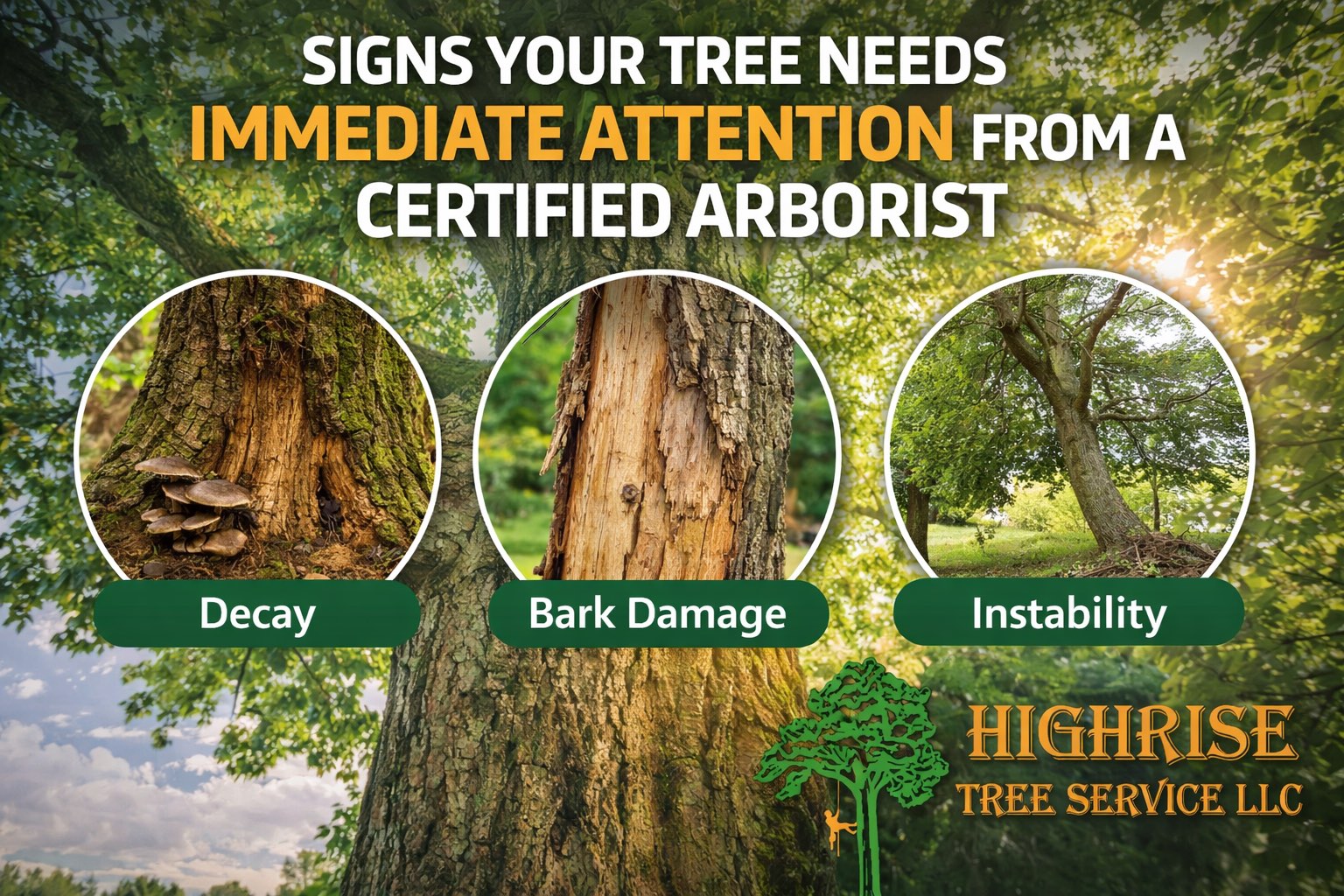
Tree bark plays a vital role in protecting the tree from pests, disease, and environmental stress. When bark begins to peel away, fall off, or show deep wounds, it can signal that the tree is experiencing serious health problems.
Large sections of exposed wood may indicate internal decay, insect infestations, or disease affecting the tree’s vascular system. While minor bark shedding can be natural for some species, widespread bark damage should be evaluated by a professional arborist.
Mushrooms or Fungal Growth at the Base
The appearance of mushrooms or fungal growth near the base of a tree is often a sign that the tree’s internal wood is beginning to decay.
Fungi thrive on decomposing organic material, which means their presence can indicate that the tree’s structural integrity is already weakening. Because this type of decay often occurs inside the trunk or roots, the tree may appear stable even when the interior wood has been compromised.
A certified arborist can determine whether the decay is superficial or a sign of a more serious structural issue.
Dead, Weak, or Falling Branches
Dead limbs hanging in the canopy can pose a serious hazard, especially during windy conditions. These branches may become brittle over time and break without warning.
Dead branches can also signal that a tree is under stress due to disease, pest damage, drought, or root issues. Removing these limbs through professional tree trimming helps improve safety and overall tree health.
Routine pruning is one of the most effective ways to prevent limbs from falling and maintain a stable tree structure.
Trees That Suddenly Begin Leaning
While some trees naturally grow at an angle, a sudden or worsening lean can indicate a serious problem with the root system.
Signs that a leaning tree may be unstable include:
- Soil lifting or cracking around the base
- Exposed roots
- Roots pulling out of the ground
- A noticeable shift after storms or heavy rain
When root systems weaken, the tree may no longer be anchored securely. This increases the likelihood of the tree falling, particularly during severe weather.
Hollow Areas or Large Cavities in the Trunk
As trees age, they may develop cavities or hollow sections within the trunk. In some cases, this is a natural process, but large hollows can reduce a tree’s structural strength.
Because trees often decay from the inside out, these cavities may indicate that the internal wood has already deteriorated significantly.
A professional arborist can assess how much healthy wood remains and determine whether the tree can safely remain or if it should be removed.
The Importance of Professional Tree Inspections
Many tree failures occur because warning signs were overlooked. A professional inspection from a certified arborist can identify hidden structural problems, disease, or pest infestations before they become major hazards.
Regular inspections are especially important after storms or other extreme weather events, as these can weaken trees without immediately visible damage.
Professional arborists have the training and experience to determine whether a tree can be preserved through pruning and care, or whether removal is the safest option.
Protect Your Property with Expert Tree Care
If you notice signs of decay, bark damage, leaning, or falling limbs, it’s best to address the issue as soon as possible. Early intervention can often save a tree—or prevent costly damage if the tree has become unsafe.
At Highrise Tree Service, our experienced team provides professional tree inspections, trimming, and removal services throughout the Tucson area. We help homeowners maintain healthy trees while protecting their property from potential hazards.
If you’re concerned about a tree on your property, contact Highrise Tree Service to schedule a professional evaluation.
Frequently Asked Questions
How can I tell if a tree on my property is dangerous?
A tree may be hazardous if you notice warning signs such as deep cracks in the trunk, large dead branches, mushrooms growing at the base, peeling bark, or a sudden lean. These symptoms can indicate structural weakness or internal decay, which should be evaluated by a certified arborist.
What causes trees to suddenly become unstable?
Trees can become unstable due to root damage, soil erosion, disease, severe weather, or internal decay. Strong winds, heavy rain, and prolonged drought can also weaken a tree’s root system and structural integrity, increasing the risk of branch breakage or the tree falling.
Can a damaged tree be saved, or does it need to be removed?
Not all damaged trees need to be removed. In many cases, professional pruning, structural support, or disease treatment can restore the tree’s health. A certified arborist can evaluate the tree’s condition and recommend the safest and most effective solution.
How often should trees be inspected by a professional?
Most trees should be professionally inspected at least once every one to two years, especially if they are large, located near structures, or have experienced storm damage. Regular inspections help detect early signs of disease, decay, or instability before they become serious hazards.
Contact us today to schedule a trimming assessment for your home or business.
For more information on Tucson Tree Trimmers and Tree Removal in Tucson, check out Highrise Tree Service in Tucson, AZ. Follow us on Facebook and Instagram.
This information is for general reading purposes only and should not be considered as professional or legal advice.